Migliore et al. present final results of pilot study Pleurectomy/ Decortication with HITHOC versus VATS pleurodesis. P.S. – here comes the MARS 2 trial results..

We are here with the latest HITHOC pilot study updates from Dr. Migliore et al. If you remember, Dr. Migliore and his colleagues in Sicily have been investigating and researching the effectiveness of HITHOC for well over a decade. In fact, we’ve talked about this study before, when we presented preliminary findings.  But now the authors are presenting the results of a six-year pilot study with long-term follow-up in a paper that was published in the scientific journal, Cell. (Original paper here).

Why this is important

In the general population, patients diagnosed with malignant pleural mesothelioma (MPM) have a mean survival of 9 to 12 months.  

The mean age at time of death was 70, meaning this disease affects relatively young patients after a long incubation period.  It affects men at a ratio of almost 4 men (3.6)  to one woman. (Presumably, this is related to occupational/ industrial exposures and trends – few women work/ worked in shipyards, construction).

While many people think that asbestos related mesothelioma is a thing of the past (or time limited due to the fact it has known carcinogenic effects), it is still being used in many products in several countries including the United States.  

How do we treat Pleural Mesothelioma now?

Despite this, the standard of treatment is generally palliative in nature.  Talc Pleurodesis is used to drain existing fluid around the lung, and then the talc is used as a sclerosing (or scarring) agent to prevent the pleural surfaces from being able to secrete more fluid. This makes the patient feel better because they breathe better – which is a very important consideration for patient care – but does nothing to treat the underlying cancer or prevent its spread. Patients generally live around 14 months after this procedure, when it is performed for mesothelioma.

Other surgical treatments have been tried in the past including Extrapleural pneumonectomy (EPP), which has a high mortality rate, and Pleurectomy/ Decortication.

Pleurectomy / Decortication, which has replaced EPP in many cases, has a low surgical mortality (1.8%), but carries a high risk of recurrence, meaning many patients’ cancer will return.   The average survival for patients having this procedure is only 17 months.

In contrast, there have been several small studies that suggest that HITHOC offers greater survival for patients with mesotheliomas – with the average survival of 20 to 35 months. But these studies have been small, and many thoracic surgeons and oncologists remain unaware of HITHOC as a potential treatment option. Others remain skeptical of its potential benefits (which is not necessarily a bad thing!) So, Dr. Migliore and his colleagues designed this study to see if a larger scale trial with more participants would be feasible or worthwhile.

Pilot studies like this one are used to determine how many patients need to be enrolled to see a statistically meaningful result, and if there is a “meaningful” result at all.

This is important because many of the studies mentioned in general media do not meet this criteria but are widely reported as successful nonetheless just because of so-called ‘newsworthiness’.  Every time readers see a story on a seemingly miraculous cure based on a garden variety supplement for a wide host of medical problems (depression, arthritis, heart disease, Alzheimer’s or you name it), this is an example why pilot studies are needed to both protect the public and to advance medicine using scientific evidence. (We’ve talked about this before.)

So what does this pilot study show?

As you may recall, the preliminary results from this study, (as we reported in 2021) showed favorable results in the HITHOC treatment group, with improved survival rates, despite the fact that many of the patients that were randomized into the HITHOC treatment group actually had more advanced cancers.

The final data confirms this with 30% of the HITHOC patients (4 out of 13) alive at median follow up of 28 months. (Compared to the pleurodesis group which only had one patient (out of 14) still alive at 19 months.  For the full results of this trial – please see the original article.

The biggest limitation for the researchers in this trial was recruiting patients for enrollment. They reached out to multiple medical centers and oncology practices – and received referrals for only five patients a year, despite the fact that Biancavilla, in Sicily is one of the mesothelioma hotspots. This small number met the threshold for statistical significance for a pilot study – but falls far short of what would be needed for a larger, more powerful study.

but for large scale, multi-site international trials in the future, we need to do a better job at connecting eligible patients with research studies..

Now what? What’s next ?

Now as we wait to see if other surgeons and oncologists will answer the challenge – and participate in a larger, multi-center (international) randomized control trial with hundreds, if not thousands of patients, to compare HITHOC to other treatments. When, and if, that happens, I will report enrollment information for potential referring physicians and patients.

Other news in the treatment of MPM

In the meantime, we await further results from the MARS2 trial, headed by the dynamic Dr. Eric Lim, in the UK. These results will be presented in Singapore, this fall.

The MARS2 trial, unfortunately, doesn’t use any HITHOC protocols but looks at whether pleurectomy/ decortication in addition to chemotherapy alone enhances survival and quality of life.  Now, if only Dr. Lim would introduce some of that chemotherapy (preferably Cisplatin) at 42.5 degrees into the chest cavity. Then we’d really have something to talk about!

References/ additional information

Featured article: Migliore et al. (2023). Comparison of video-assisted pleurectomy /decortication surgery plus hyperthermic intra-thoracic chemotherapy with VATS pleurodesis for treatment of Malignant Pleural Mesothelioma: a pilot study. Cell, 25 May 2023.

Marinaccio et al. (2015). Malignant mesothelioma due to non-occupational asbestos exposure from the Italian national surveillance system (ReNaM): epidemiology and public health issues. Occup Environ Med 2015 Sep;72(9):648-55. doi: 10.1136/oemed-2014-102297. Epub 2015 Jun 4.

Nuyts, et al. (2018) Hotspots of Malignant Pleural Mesothelioma in Western Europe. Transl Lung Cancer Res. 2018 Oct; 7(5): 516–519.

As we’ve talked about in a previous interview with Dr. Isik, (Turkiye) there are regional areas where natural conditions (such as asbestos in the soil) lead to mesothelioma clusters. There are also areas, like the naval shipyards in the United States, where occupational/ industrial exposure leads to disease clusters.  In this investigation of mesothelioma clusters in Western Europe, the majority were industrial/ occupational in nature.

Is asbestos illegal?,  The Mesothelioma Center, consumer information by lawyers for mesothelioma patients.

Banning Asbestos,  Mesothelioma.com,  consumer information by lawyers for mesothelioma patients.

Palliative versus curative care in Mesothelioma Mesotheliomafund.com – another legal site for mesothelioma patients.

HITHOC in Germany, a tale of two cities.  Thoracics.org

Q and A with Migliore et al.. about Hithoc and Mesothelioma in Catania, Italy

Thoracics.org follows up with Dr. Marcello Migliore from the University of Catania, on his work in the area of HITHOC and malignant pleural mesothelioma

Dr. Migliore and his team performing HITHOC

As discussed in a previous post on HITHOC and Mesothelioma, Dr. Marcello Migliore and his colleagues in Catania, Italy have published results from a small pilot study on the use of HITHOC (cytoreductive surgery and intrathoracic chemotherapy) to treat malignant pleural mesothelioma.

Thoracics.org contacted Dr. Migliore to find out more about that study as well as his on-going research in this area. He was also kind enough to offer his opinions on Hope and the diagnosis of malignant mesothelioma.

On-going research on HITHOC

Dr. Marcello Migliore

Thoracics.org: Dr. Migliore, woud you tell us more about your current research on HITHOC and mesothelioma?

Dr. Migliore: We are conduction a pilot study to compare pleurodesis with talc vs HITHOC in mesothelioma patients. Goals are quality of life and survival.

Thoracics.org: How many more patients are you hoping to enroll ?


Dr. Migliore: we hope to enroll at least 12 patients (unfortunately in almost 2 years we enrolled only 6 patients)

Thoracics.org:  Would you tell us more about eligibility criteria?

Dr. Migliore:  All patients with mesothelioma will enter the study protocol except those who cannot undergo surgery for poor performance status.

Thoracics.org:  Would you describe the procedures for our readers?

Dr. Migliore: Talc pleurodesis is performed using the uniportal VATS technique (2 cm skin incision), which is a concept that was introduced  by us already in 1998 (and published in 2001 and 2003).  As you know,  Gonzalez- Rivas  is now well known worldwide for using  the concept of uniportal technique to perform major lung resection. Pleuerectomy and decortication with HITHOC is  performed using the bi-portal VATS technique but with an skin incision of around 8 cm.

Thoracics.org:  In your preliminary paper on your last pilot study, there were a couple patients with lung cancer who were included in the HITHOC trials.  Is that the same for your current study?

Dr. Migliore:  While I feel that some patients with lung cancer could have benefited from HITHOC, for this study, the indications must be strictly limited [to patients with malignant mesothelioma only].

As you know, the largest group of patients with lung cancer are patients with more advanced cancer; stage IV lung cancer patients, and because survival  is dismal, the standard practice is no surgery except palliative procedures. But, there are selected patients in whom there is some evidence that surgery could help. For this reason my personal reaction is that,  in the near future, we should aim to prolong survival in stage IV lung cancer patients also by surgery. We are in mind to start a new study on the role of surgery in selected stage IV lung cancer patients.

Migliore and colleagues
Dr. Migliore and his colleagues from the University of Catania, Policlinico Hospital, Catania, Italy

Technical Aspects on HITHOC

Thoracics.org: Does previous pleurodesis make surgery more difficult?

Dr. Migliore: Yes, due to the development of adhesions between parietal pleura and  the chest wall, as well as between the parietal and the visceral pleura, which are really difficult to remove.  It requires delicate work using the fingers ( at the end of the operation you can have pain in fingers and fingertips!)

Thoracics.org: Does it lead to increased operating room time, or increased bleeding from adhesions?

Dr. Migliore:  While is certainly increases operating time but there is no evidence of increased bleeding but air leaks are more frequent. Intraoperatively, it is imperative to put attention to every single detail to avoid postoperative complications.

Thoracics.org: Do you find that patients with diaphragm involvement develop more post-operative complications or are more likely to develop disseminated disease ?

Dr. Migliore: That has not occurred in this group of patients but the number of patients is small, and therefore it is impossible to answer.

Other considerations

Thoracics.org: What has been the biggest obstacle in your research?

Dr. Migliore: Certainly living in a “rural” region with cultural dogmas and financial restriction for research are probably the most common obstacles to speedy clinical surgical research.

On Hope & Malignant Mesothelioma

[During a related study] “We operated two patients and one is alive after 3 years. She was 40 y.o. lady with a 15 year-old child. She had malignant pleural effusion with a peripheral lung tumor and was treated elsewhere with talc pleurodesis alone, and 6 months survival was given. We performed a parietal and visceral pleurectomy with HITHOC. She is alive (with recurrence) and her son is now 18 yo. This simple case give an explanation that an operation although “experimental, gives hope (we should not give false hope) and permits to these unfortunate patients to see light in the dark”.

Dr. Marcello Migliore, MD

Thoracic Surgeon

Section of Thoracic Surgery

Department of General Surgery & Medical Specialities

University of Catania, Policlinico Hospital

Catania, Italy

Editor’s note:  Some minor edits have been made for the sake of formatting.  Thank you to Dr. Migliore and his team.

Mesothelioma, Hope and HITHOC

Is there hope? Thoracics.org discusses hope and mesothelioma along with the most recently published work in the area of cytoreductive surgery and intrathoracic chemotherapy (HITHOC).

Is there hope?

In a recent article in Future Oncology, Dr. Maat and his colleagues explore the question of whether hope exists for patients with malignant pleural mesothelioma (MPM).   The authors acknowledge the difficulties for patients and providers alike in maintaining hope when the odds are against it.  Dr. Maat also discusses the differences between offering false hope and belief in the possibilities of emerging therapies.

HQ-Dove-Wallpaper-980x613

“Dismal” prognosis of malignant mesothelioma

This brings to the forefront one of the biggest failures in thoracic surgery and oncology; malignant mesothelioma.  While great strides have been made in the last fifty years in the treatment of many other cancers, malignant mesothelioma continues to carry a dismal prognosis with a lifespan measured in months.  Not only that, but even the great “wins” in this area, like pleural decortication, are often only viewed as such when measured against palliative treatment (Zahid, Sharif, Routledge & Scarci, 2011).

This is one of the reasons Thoracics. org has taken such an interest in emerging therapies and research in areas such as HITHOC, and will continue to do so.  Sometimes even the most promising data takes a dead-end, like in the case of Dr. Isik in Ganziantep, Turkey, where HITHOC and mesothelioma research have been forced to take a backseat to ISIS and the Syrian refugee crisis.  This along with financial limitations (unfunded research) have threatened a promising program.

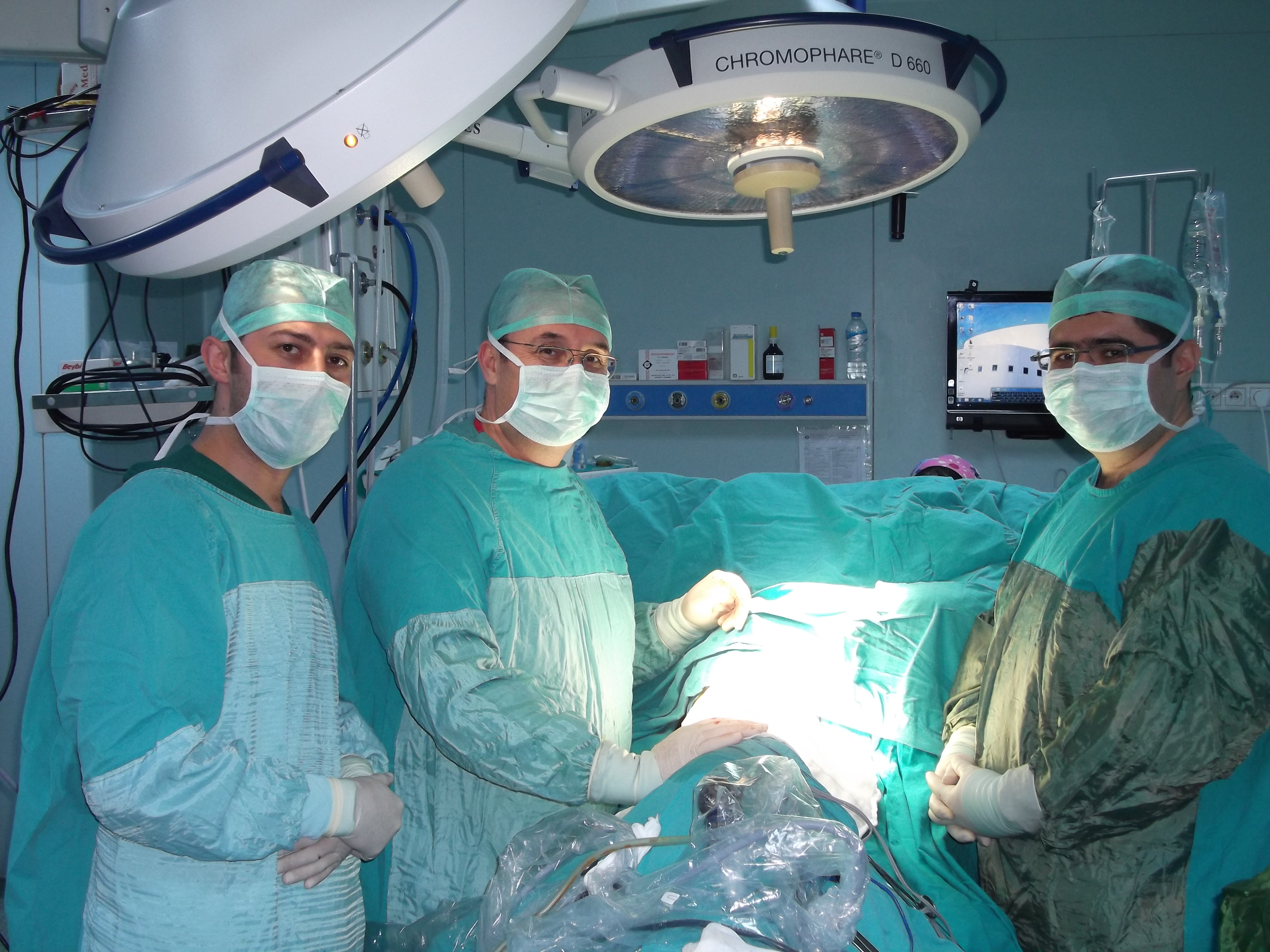
Dr. A. Feridun Işık and his team perform cytoreductive surgery and the HITHOC (HIPEC) procedure
Dr. A. Feridun Işık and his team perform cytoreductive surgery and the HITHOC (HIPEC) procedure (in 2014)

In situations like Dr. Isik’s, it is easy for readers and other researchers themselves to lose hope.  If programs showing favorable results like Dr. Isik’s can not survive, how can we expect support for additional research in this area?  But just as Dr. Maat advocates for hope among patients, and providers, we here at Thoracics.org continue to advocate for a hopeful future in the area of HITHOC; not just for malignant pleural mesothelioma, but for a whole spectrum of cancers that remain frustratingly difficult to treat.

Migliore et al. 

As such, Thoracics.org would like to highlight some of the most recent HITHOC publications.  Two of these studies are from Dr. Migliore and his colleagues at Catania, Italy.  The first paper, describes their preliminary experiences with eight patients (6 patients with MPM and 2 patients with lung cancer).  The authors discuss inclusion criteria, methodology and surgical technique (uniportal VATS/ and mini-thoracotomes) including one hour of chemoperfusion with cisplatin at 42.5 degrees centigrade.  Interestingly, in this tiny subset of patients, the surgeons included one patient who underwent diaphragmatic resection, which is usually considered a contraindication to the procedure according to most researchers*.  When we review the post-operative survival of these patients in this and the subsequent publication, it is worth asking about the specific survival time of the patient with diaphragmatic resection, and whether disease recurred in this specific patient.

The authors also included 2 patients with adenocarcinoma of the lung with pleural metastases in their priliminary series.  One of these patients had previously undergone talc pleurodesis.

Consistent with other recently published reports, mortality for this limited study was 0% (or much lower than what was previously reported during the “first generation” of cytoreductive surgery with hyperthermic chemotherapy in the early 2000’s).  Additional post-operative complications included 2 cases of post-operative nausea/ vomiting and one patient with acute kidney injury (post-operative creatinine 2.0).

The second publication by Migliore et al., also in Future Oncology is an expanded discussion of the six malignant pleural mesothelioma patients with better survival outcomes as 4 patients survival extended past the time of publication (one death at 6 months post-operative, one death at 24 months).

Anesthesia and HITHOC 

While this article dates back to mid 2014, Kerscher et al. is one of the only authors to investigate and describe the unique challenges for anesthesiologists managing these patients during the intra-operative and post-operative period.  Kerschner and colleagues report on their experiences with 20 patients undergoing cytoreductive surgery and HITHOC at the University Medical Center in Regensberg, Germany from 2008 to 2013.  In addition to describing the intra-operative anesthetic and post-operative analgesic techniques used as their institution, Kerscher et. al also delve into the specific management strategies related to the use of HITHOC, such as the addition of ventilatory peep during the cycling of hyperthermic chemotherapy to increase the amount of lung surface area exposed to the chemotherapeutic agents (cisplatin in this study).

Recommended reading

Their discussion of the management of intra-operative challenges caused by the infusion of chemotherapy such as low cardiac output, hypotension, pulmonary edema and coagulopathies along with an in-depth look at hemodynamics, volume resuscitation, challenges in ventilation and normothermia make this paper recommended reading for any surgeons or institutions interested in piloting their own HITHOC program.  This article also serves as a reminder that while many small studies report minimal complications, there can and are serious and potentially fatal intra-operative complications in patients undergoing HITHOC.

Like Dr. Hung and Dr. Chen, this paper serves an important reminder that all advancements and discoveries in thoracic surgery require a cohesive, teamwork approach.

*Most surgeons who perform HITHOC / HIPEC exclude patients with diaphragmatic involvement because this is believed to make it impossible to prevent widespread dissemination of disease – since the diaphragm is the physical, tissue barrier that separates the chest cavity from the abdomen.

References

Maat, A., Cornelissen, R., Bogers, J. & Takkenberg, J. (2015). Is the patient with mesothelioma without hope?  Future Oncol., 2015, 11 (24s), 11-14.

Migliore M, Calvo D, Criscione A, Viola C, Privitera G, Spatola C, Parra HS, Palmucci S, Ciancio N, Caltabiano R, Di Maria G. (2015).  Cytoreductive surgery and hyperthermic intrapleural chemotherapy for malignant pleural diseases: preliminary experience.  Future Oncol. 2015;11(2 Suppl):47-52. doi: 10.2217/fon.14.256.

Migliore M, Calvo D, Criscione A, Palmucci S, Fuccio Sanzà G, Caltabiano R, Spatola C, Privitera G, Aiello MM, Parra HS, Ciancio N, Di Maria G. (2015).   Pleurectomy/decortication and hyperthermic intrapleural chemotherapy for malignant pleural mesothelioma: initial experience.  Future Oncol. 2015 Nov;11(24 Suppl):19-22. doi: 10.2217/fon.15.286.

Kerscher C, Ried M, Hofmann HS, Graf BM, Zausig YA. (2014).  Anaesthetic management of cytoreductive surgery followed by hyperthermic intrathoracic chemotherapy perfusion.  J Cardiothorac Surg. 2014 Jul 25;9:125. doi: 10.1186/1749-8090-9-125.  An excellent overview of intra-operative management considerations for patients undergoing HITHOC procedures.  Recommended reading.